Light
Direction, shadow and reflection establish mood before detail.
A conceptual spatial-design study exploring how light, material, proportion and atmosphere can shape human emotion and behaviour.
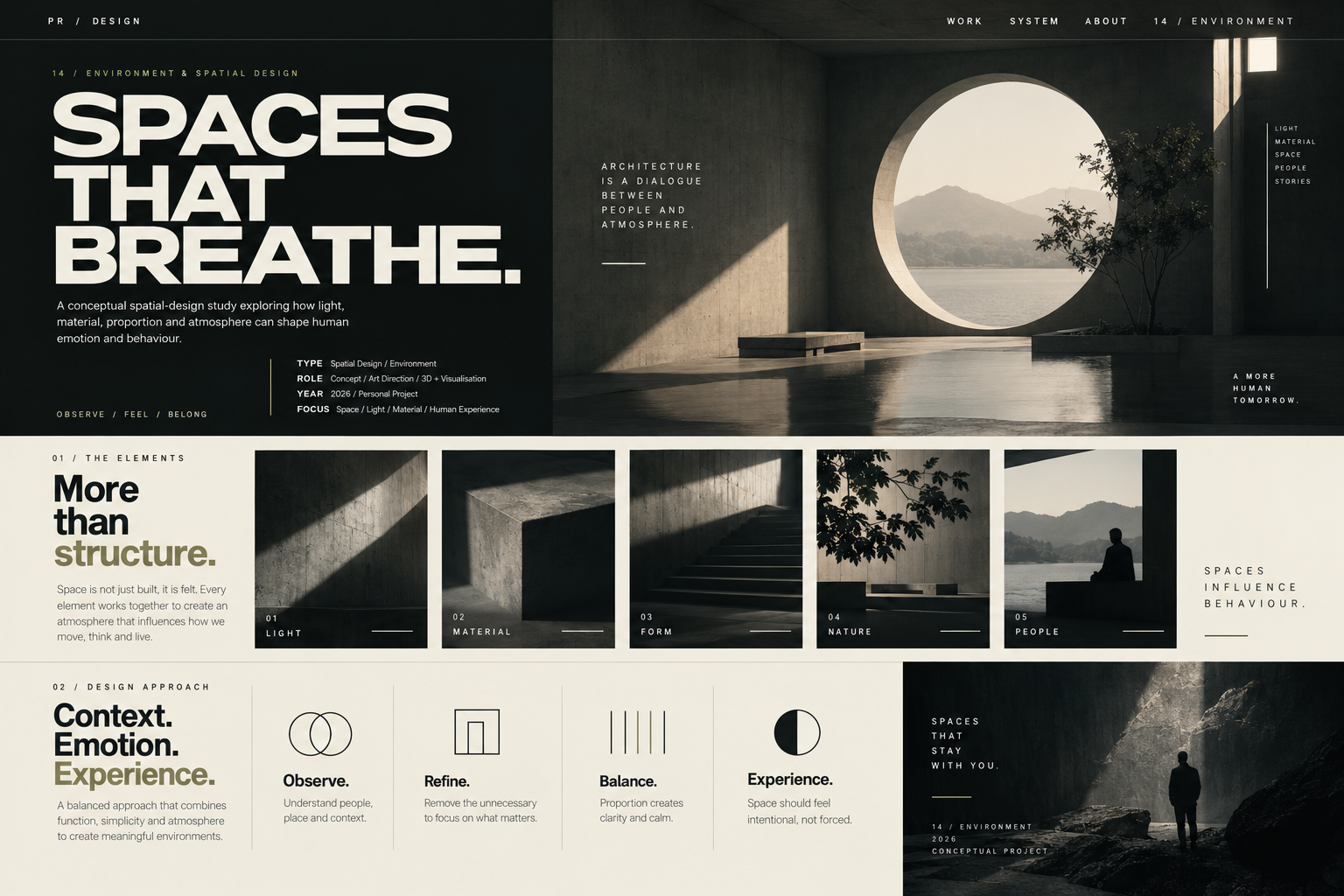
Space is not just built, it is felt. Every element works together to create an atmosphere that influences how we move, think and live.
Direction, shadow and reflection establish mood before detail.
Texture and weight make a space feel grounded and human.
Simple proportions create clarity, rhythm and pause.
Organic presence softens architecture without weakening it.
Human scale gives the environment its meaning.
A balanced approach combining function, simplicity and atmosphere to create meaningful environments.
Understand people, place and context.
Remove the unnecessary to focus on what matters.
Proportion creates clarity and calm.
Space should feel intentional, not forced.
AURÆLIS™ becomes the display voice for environmental titles, signage and editorial moments.
A conceptual personal study in environment, spatial identity, material language and human experience.